Every organization relies on inspections. Construction companies inspect equipment before work begins; municipalities inspect vehicles and public assets; utility companies inspect fleets and infrastructure; and industrial facilities inspect machinery and safety equipment.
The reasons may vary, but the goal is usually the same: identify issues before they become problems. Yet not all inspection programs are created equal. Some organizations treat inspections as paperwork. Others treat them as an essential part of operational readiness. Few groups understand that distinction better than fire departments.
When Readiness Matters
For most organizations, equipment downtime is expensive, but for fire departments, equipment readiness can have much greater consequences. Fire apparatus, rescue equipment, emergency vehicles, pumps, ladders, breathing apparatus, and countless other pieces of equipment must be ready to perform when needed. There is little room for uncertainty. As a result, inspections are not simply a documentation exercise. They are part of a broader commitment to preparedness.
The objective is not to complete a form; it is to ensure the equipment is ready for service. That is a mindset every industry can learn from.
The Best Inspection Program Is the One People Actually Use
Organizations often focus on the documentation side of inspections. Forms are created, policies are written, and procedures are established, but one critical question is sometimes overlooked: Will personnel actually use the inspection system consistently and correctly?
An inspection program only works when people engage with it. If inspections are difficult, repetitive, confusing, or disconnected from real-world workflows, participation often declines. Forms become rushed. Important details get missed. Inspections become something to get through rather than something that adds value. This challenge exists across virtually every industry. Whether someone is inspecting a fire truck, a loader, a utility vehicle, or a piece of industrial equipment, the process must be practical enough to support consistent use.
Documentation Is Important. So Is Buy-In.
Many organizations evaluate inspection systems based primarily on the records they produce. Documentation certainly matters as it supports maintenance activities, demonstrates due diligence, and provides accountability, but documentation is only one part of a successful inspection program.
Personnel buy-in is equally important. The most effective inspection systems are designed around how inspections actually happen in the field. They follow logical workflows. They are easy to navigate. They help users focus on the equipment rather than the paperwork. When personnel trust the system and find it useful, inspection quality improves naturally. That is when documentation becomes meaningful because it reflects a real inspection, not simply a completed form.
Why Fire Departments Trust The Checker
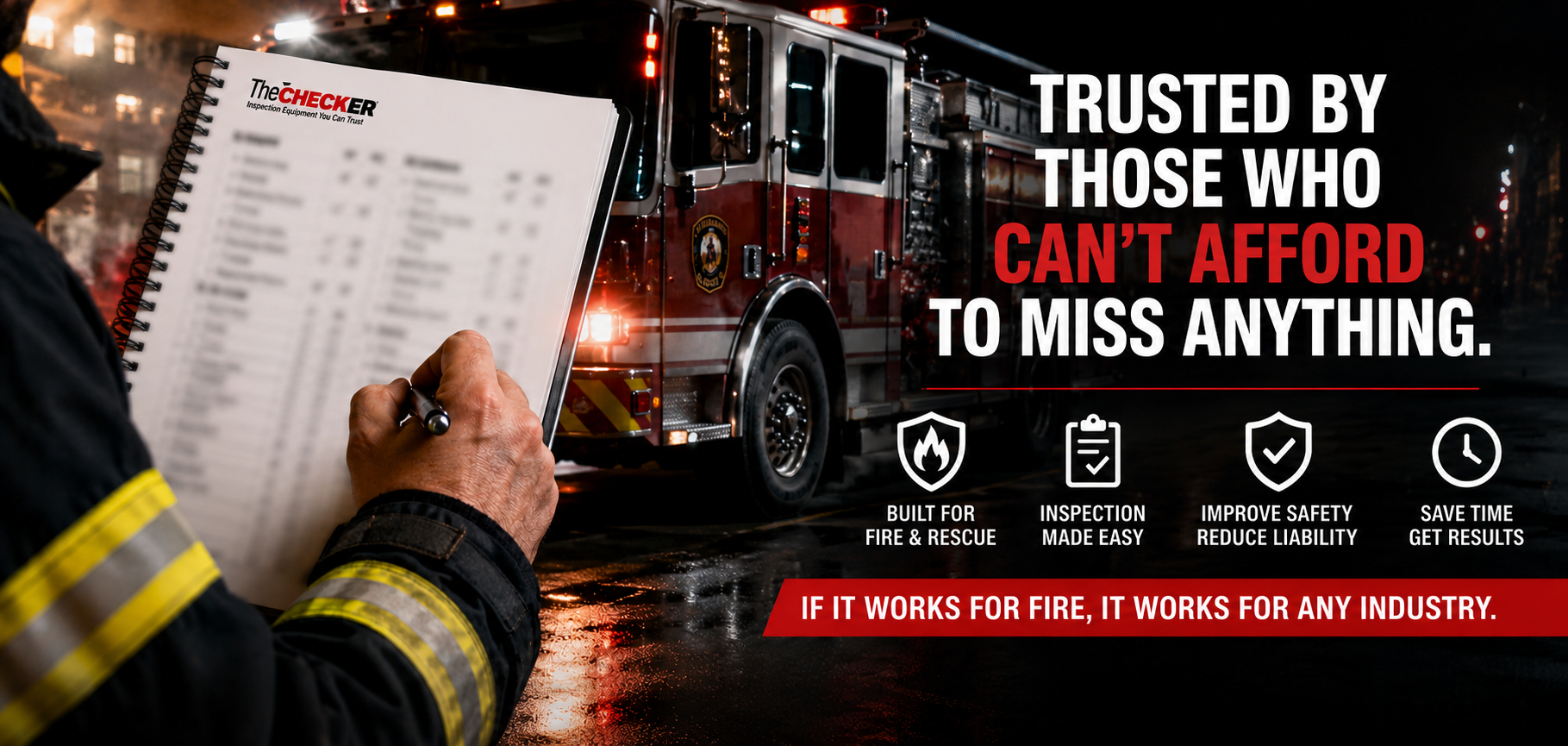
For decades, fire departments have relied on The Checker to support inspections of apparatus, emergency vehicles, equipment, facilities, and other critical assets. The reason is straightforward.
The Checker was developed around the realities of inspection programs, not around the mechanics of printing forms. Its inspection books are designed to support field use, encourage consistency, and make inspections easier to complete accurately and efficiently. That focus on usability has helped make The Checker a trusted resource within fire and rescue services, where equipment readiness is a daily priority.
The Lesson for Every Industry
Most organizations are not responsible for emergency response, but every organization depends on equipment, vehicles, assets, and people performing as expected. The principles that make inspections successful in fire services are the same principles that support better inspections everywhere:
- - Make inspections easy to complete properly.
- - Design systems around real-world workflows.
- - Encourage participation rather than compliance alone.
- - Focus on readiness, not just paperwork.
- - Create records that reflect meaningful inspections.
Fire departments understand that inspections are ultimately about preparedness. The same idea applies whether you operate a fleet of fire apparatus, construction equipment, municipal vehicles, utility assets, or industrial machinery. Because the purpose of an inspection program is not to produce documentation. It is to ensure that equipment is ready when needed.