Electric vehicles and battery-powered equipment are becoming a more common part of the workplace. Companies are adding electric fleet vehicles, forklifts, pallet trucks, aerial lifts, landscaping equipment, power tools, and other machinery as they seek quieter operation, lower emissions, and reduced fuel and maintenance costs.
This transition offers real advantages. It also changes what needs to be inspected.
An electric vehicle may not have an oil level or exhaust system to check, but it still has brakes, tires, steering, controls, lights, safety devices and structural components. It also introduces batteries, charging equipment, high-voltage systems, cables and connectors that require attention.
The lesson is simple: electrification does not eliminate the need for inspection. It makes it important to update what is being inspected.
New Technology Creates New Inspection Points
Many organizations already have established inspection routines for vehicles and equipment. Operators know to look for leaks, worn tires, damaged guards, loose components and problems with brakes or controls.
Battery-powered equipment adds another layer.
Lithium-ion batteries can be damaged by impact, crushing, punctures, exposure to unsuitable temperatures and improper charging. Signs of a problem may include excessive heat, swelling, deformation, leaks, corrosion, unusual odours, discolouration or sounds such as popping or hissing. CCOHS recommends regularly inspecting high-voltage batteries for these and other signs of potential failure or thermal runaway. (ccohs.ca) These warning signs may be visible before a breakdown or emergency occurs, but only when someone is expected to look for them.
That is why inspection procedures should evolve alongside the equipment. Operators need to understand what normal conditions look like, which warning signs should be reported, and when equipment must be removed from service.
The Charging System Is Part of the Equipment System
A battery-powered vehicle or machine does not operate in isolation. Its charger, electrical connection and charging location are all part of the working system.
A damaged charging cable, a loose connector, or an overheated outlet may pose a hazard even when the equipment itself appears to be in good condition. CCOHS recommends inspecting charging stations, cords, plugs and electrical fittings for damage or wear before use and repairing or replacing damaged equipment immediately. (ccohs.ca) The charger should also be approved for the battery and equipment being charged. Manufacturer instructions matter because different batteries have different charging requirements. Using an incompatible, damaged or uncertified charger can increase the risk of electrical shock, overheating, fire or battery damage. (ccohs.ca)
A good inspection process should therefore consider the complete charging connection:
- - Is the charger the correct one for the equipment?
- - Are the cable, plug and connector undamaged?
- - Does anything feel unusually warm?
- - Is the connection secure?
- - Is the charger protected from impact, moisture and traffic?
- - Are damaged components clearly identified and taken out of use?
These checks can help catch small problems before they become larger ones.
The Charging Area Matters Too
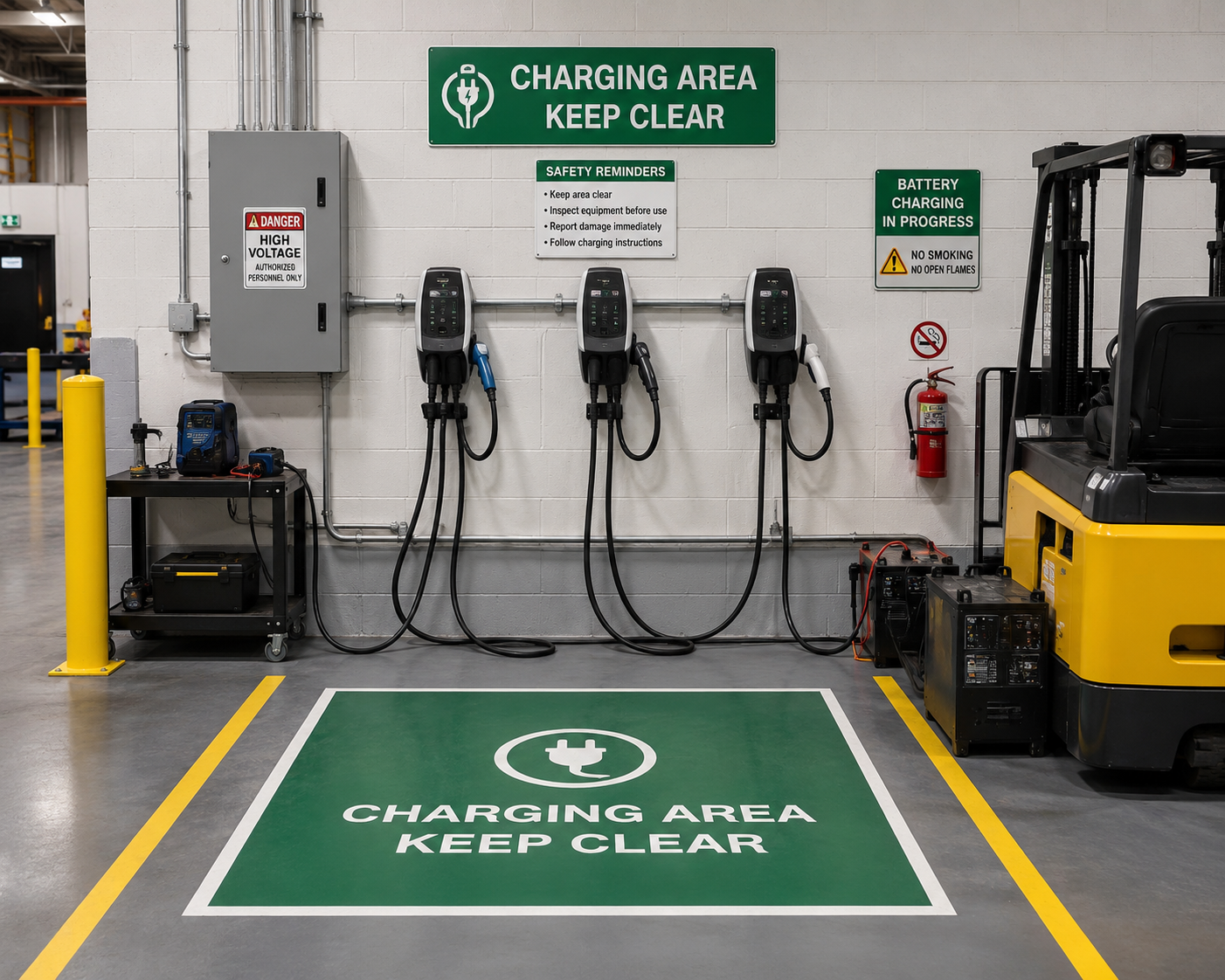
As more electric equipment enters a workplace, charging can easily spread into any available corner. Tools are plugged in beside stored materials. Equipment is parked close together. Chargers are added without considering traffic routes, ventilation or access to electrical panels. Over time, a temporary charging location can quietly become a permanent part of the operation.
That area needs to be inspected like any other work area. Charging stations should be kept clear of combustible materials, unnecessary clutter and anything that could damage a cable or connector. Access to electrical panels, emergency equipment and exits should remain unobstructed. The area should be clean, dry and suitable for the type and number of batteries being charged.
CCOHS advises workplaces to follow manufacturer instructions and applicable occupational health and safety, electrical, building and fire-code requirements when developing battery-charging procedures. It also recommends using appropriately certified charging equipment and keeping lithium-ion batteries away from flammable materials while charging.
The right charging-area requirements will depend on the equipment, battery chemistry, facility and applicable regulations. The important point is that the area should be deliberately assessed and routinely checked rather than allowed to develop without oversight.
Electric Does Not Mean Maintenance-Free
Electric equipment is sometimes described as requiring less maintenance because it may have fewer moving parts than equivalent combustion-powered equipment. Less maintenance doesn't mean no maintenance. Tires still wear. Brakes still require attention. Controls and safety devices can still fail. Equipment can still be damaged by collisions, weather, improper use and demanding working conditions. Batteries lose capacity and can be affected by heat, cold, vibration and physical damage.
Electric vehicles may also contain high-voltage systems operating at hundreds of volts. WorkSafeBC notes that compromised electric-vehicle batteries and electrical systems can create risks including electric shock, electrical burns, fire, explosion and exposure to toxic substances. (WorkSafeBC)
Most operators will never be expected to diagnose or repair these systems. They should, however, be able to recognize visible damage or unusual conditions, stop using the equipment and report the issue to an appropriately trained person.
The inspection does not need to turn every operator into a battery technician. It needs to help the operator know when something does not look right.
Inspection Procedures Should Change Before an Incident
One of the common challenges with new technology is that equipment changes faster than workplace procedures. A company may purchase an electric vehicle or piece of equipment, train employees on how to operate it and place it into service. However, the existing inspection form may still be designed for a diesel, gasoline or propane-powered unit. The charger and charging area may not appear on any regular inspection at all. This creates a gap between the equipment being used and the system intended to manage its condition.
Before adding electrified equipment, organizations should review:
- - Existing pre-use and scheduled inspection forms
- - Manufacturer inspection and charging instructions
- - Battery-damage reporting procedures
- - Charging-station and charging-area inspections
- - Out-of-service and escalation procedures
- - Emergency response plans
- - Operator and maintenance-worker training
This review should also take place when equipment, batteries, chargers or operating conditions change.
Make Battery and Charging Inspections Repeatable
Knowing that something should be checked is different from making sure it gets checked consistently.
The Checker’s Battery Charging & Area Inspection Checklist Book provides a practical way to establish and document regular inspections of battery-charging equipment and the surrounding area. It helps turn general awareness into a repeatable process that operators and supervisors can follow.
A checklist can help an organization clearly define what needs attention, create accountability for completing the inspection and provide a record of problems that require follow-up. It also makes it easier to reinforce expectations as new equipment, operators and charging stations are added.
Electrified equipment will continue to become a larger part of many workplaces. The organizations that manage the transition well will be the ones that update their safety and inspection systems along with their technology.
New equipment creates new opportunities. It also creates new things to check.